Hydraulic Modeling Platform for Water Distribution Systems
Develop safe and sustainable municipal water supply networks with optimal design.
Fluidit Water
Modern, visual, and agile.
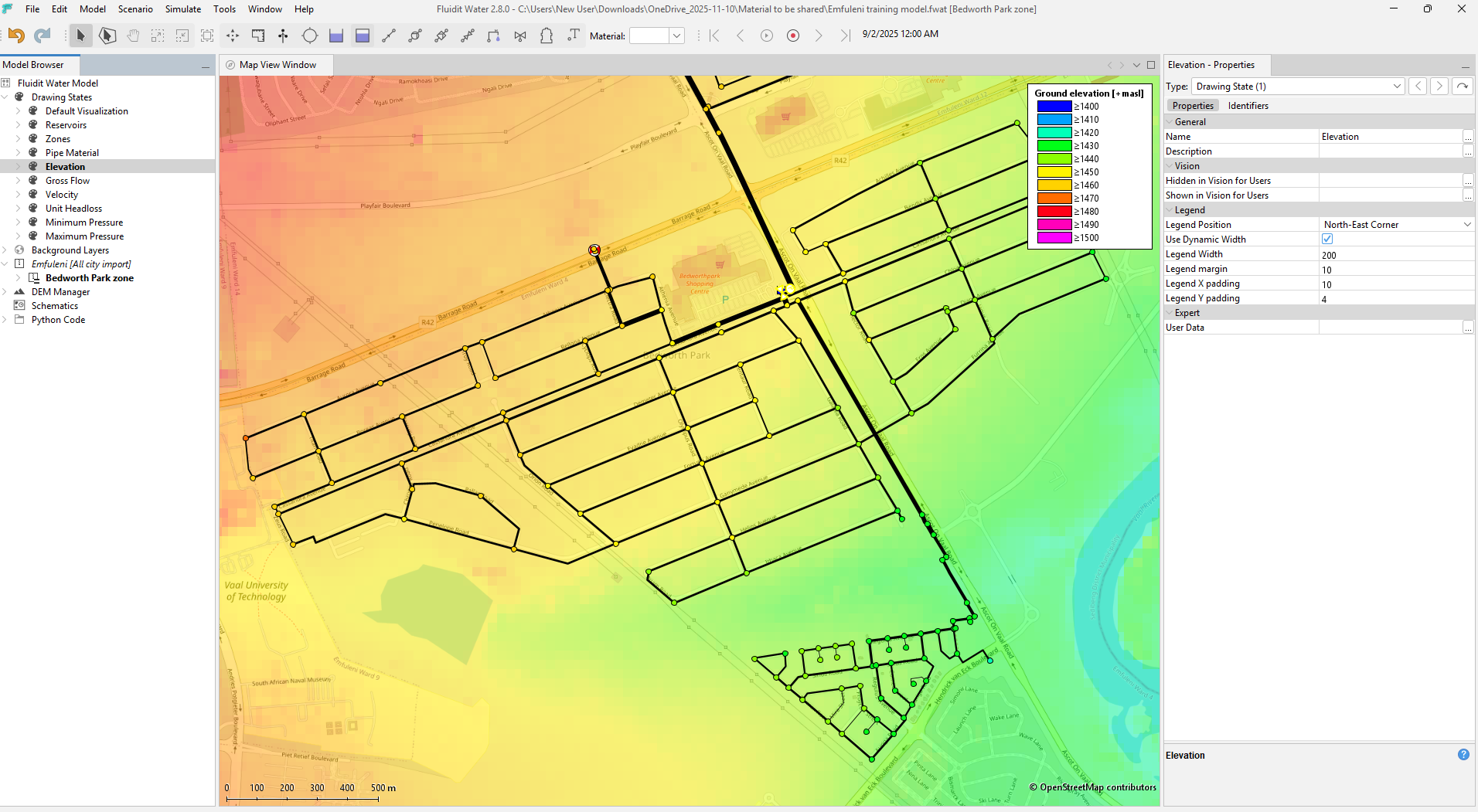
Fluidit Water is the best hydraulic simulation software for water distribution systems. Plan investments, develop creative solutions and optimize the operation of the system.
Fluidit leverages modern software architecture to enable systematic, automated processes. Training and collaboration are seamlessly conducted via Microsoft, ensuring knowledge transfer to utility staff.
The combination of deep hydraulic expertise and modern digital collaboration tools allows customers to transition from offline analysis to real-time predictive operations.
Design
- Design new networks, consumers, pumping stations, water storage tanks, and valve stations.
- Prepare for emergencies and foresee the effects of pipe bursts and pump failures.
- Plan resiliently and test how the system performs under limited conditions, such as using backup supply routes or operating without a water tower.
Analysis
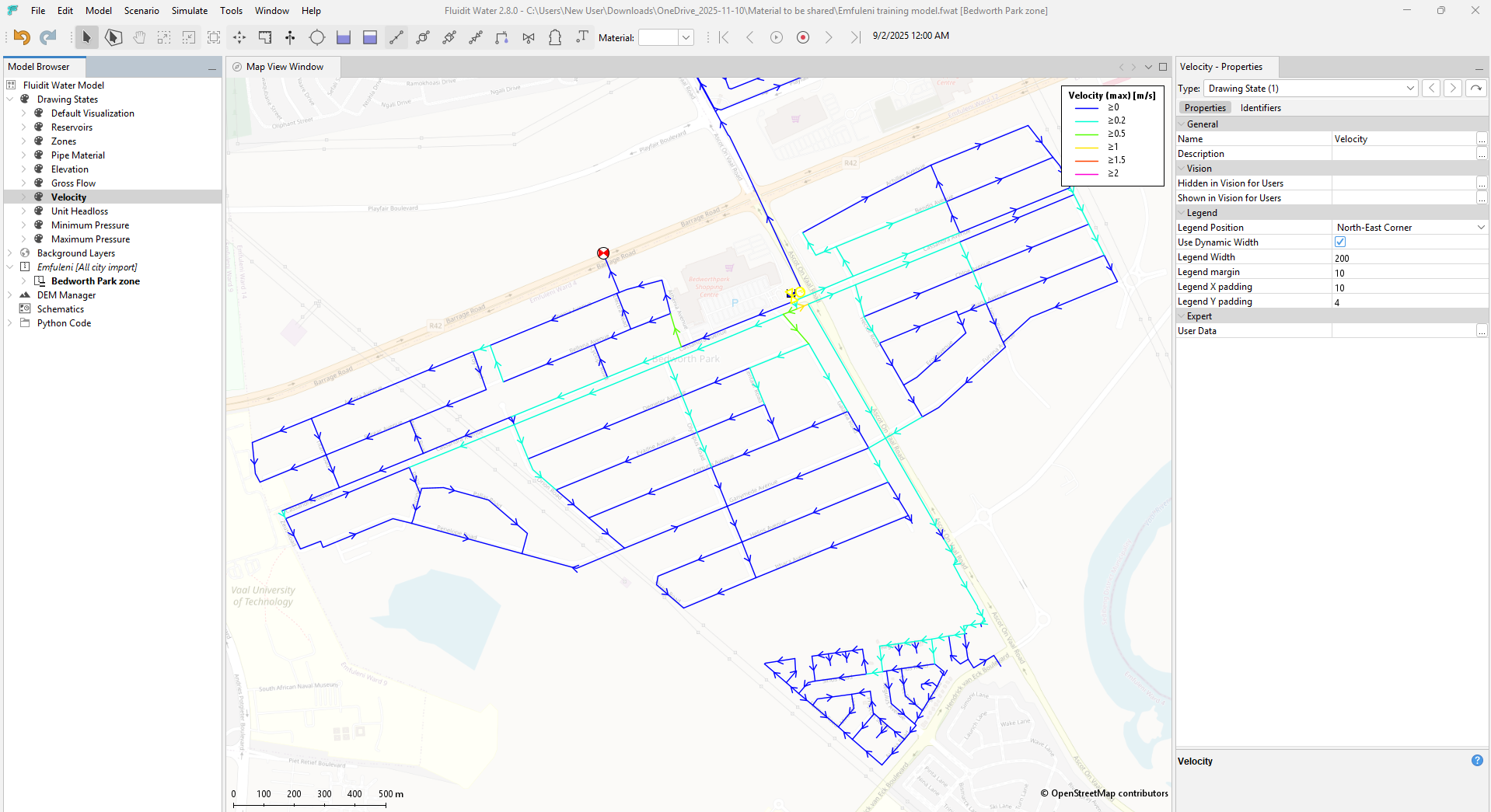
- Analyze system performance and identify the bottlenecks limiting water delivery.
- Benchmark system performance. Simulation results provide a baseline for data comparison. Utilize the network to its full potential by identifying underperforming assets.
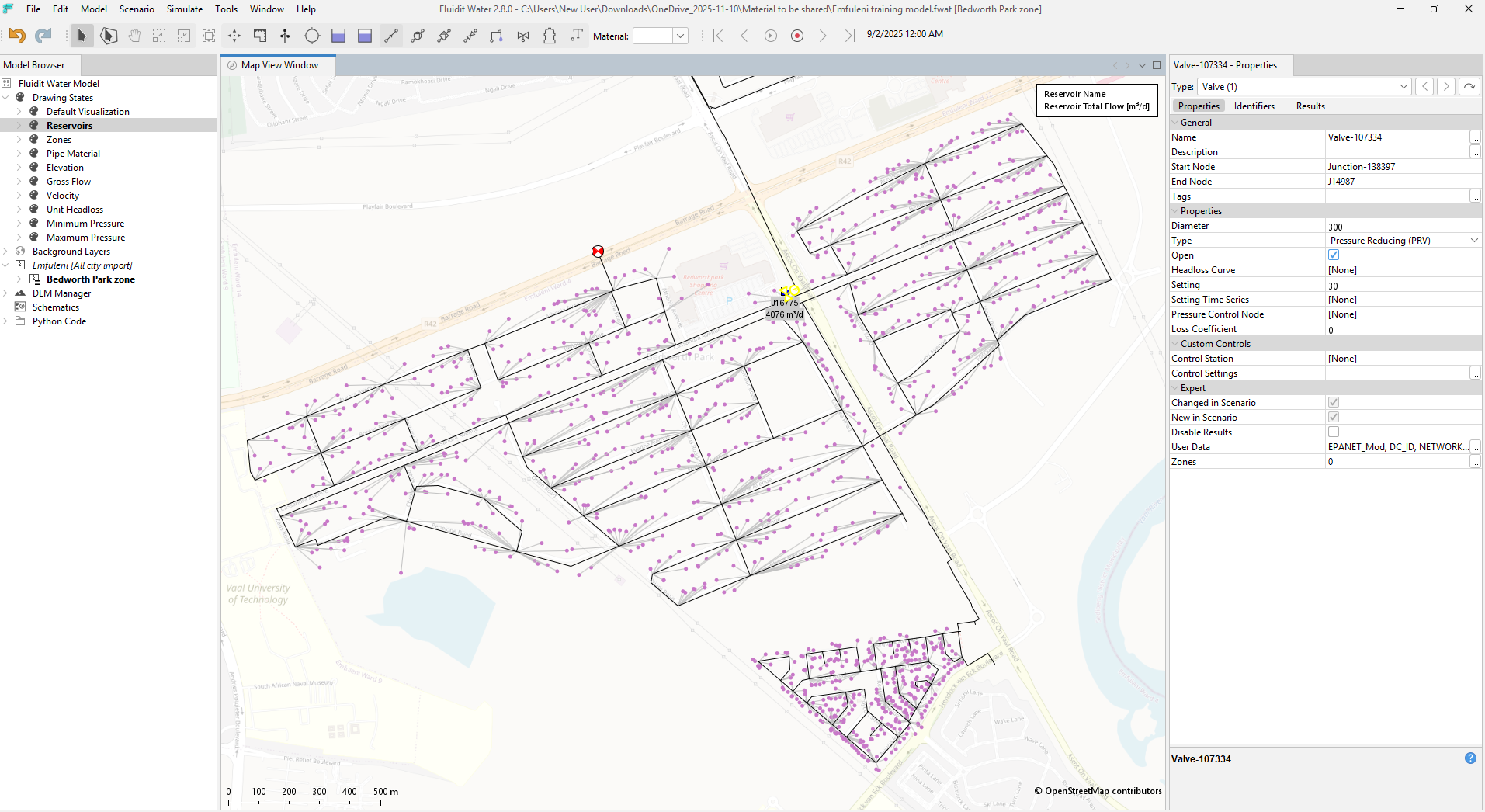
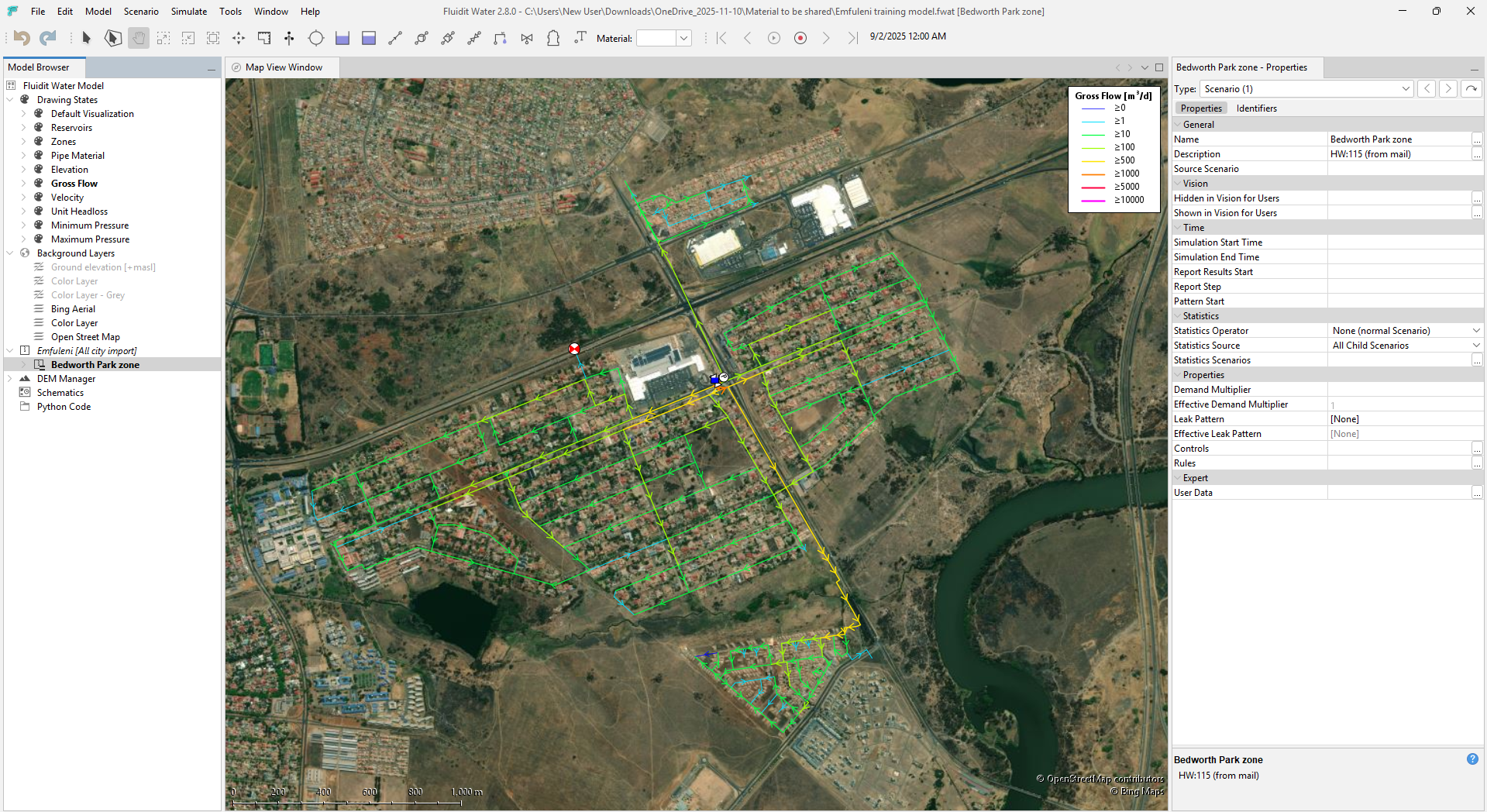
- Report and store results with interactive maps, tables, and Schematic dashboards. These views refresh automatically with the latest model results.
Operations
- Operators and utility personnel benefit from the models, gaining a better overview of the system without needing to model themselves. Share results in a web browser via Fluidit Vision.
- With Real-Time implementation, see the network’s current state at a glance and how the system has performed during the latest events.
- Optimize control settings to reduce production, pumping, and leak costs while maintaining excellent service quality.
Industry Challenges
Utilities face high non-revenue water and unmapped infrastructure. The ideal solution is a physics-based digital twin. Outcomes include targeted leak detection, optimized pressures, and sustainable management.
Primary challenges
High non-revenue water (leakage),unmapped infrastructure, andcomplex system controls due toelevation differences.
Ideal solution
A continuously maintainable “digitaltwin” that reflects real-worldbehavior, enabling leak detectionand “what-if” scenario planning.
Desired outcomes
Reduced water loss, targetedmaintenance, and lower operationalcosts.